Forex Brokers Review 2026

Key Features of the Best Regulated Brokers

When choosing a regulated broker, key factors such as leverage, spreads, trading platforms, and asset variety are crucial in ensuring a secure and efficient trading experience. Below are the essential features that define top-tier regulated brokers, along with specific details for clarity.

1. Strict Regulatory Oversight

Leading brokers operate under the supervision of top-tier regulatory authorities. For example, HFM is regulated by CySEC, FCA, DFSA, and FSCA, while Xtreme Markets is governed by FSC. These regulations ensure strict financial and operational transparency, providing traders with peace of mind.

2. Fund Protection and Segregated Accounts

To safeguard traders’ capital, top brokers maintain client funds in segregated accounts, preventing their misuse in operational expenses. Brokers like Xtreme Markets and BDSwiss adhere to these measures, enhancing fund security. Under ,FSC,ASIC regulations, FP Markets also offers access to 10,000+ instruments, creating a vast and secure trading environment.

3. Account Types and Execution

The best brokers provide direct market execution accounts, ensuring traders access real-time pricing with minimal intervention. Brokers like FP Markets and XtremeMarkets offer raw spread accounts with ultra-low spreads starting from 0.0 pips and a commission of $3 per lot. Meanwhile, standard accounts at brokers like HFM and BlackBull Markets provide spreads from 1 pip and 0.8 pips, respectively.

4. Leverage and Competitive Spreads

Leverage varies based on the broker and regulatory jurisdiction. Xtreme Markets offers leverage up to 1:1000, while FP Markets and BlackBull Markets maintain a more balanced 1:500. Competitive spreads are also vital—BlackBull Markets and EightCap offer spreads from 0.8 pips, whereas HFM and FP Markets start at 1 pip.

5. Advanced Trading Platforms

A robust trading experience depends on access to top-tier platforms. Leading brokers provide MetaTrader 4 (MT4) and MetaTrader 5 (MT5), catering to traders of all levels. For instance:

  • Xtreme Markets supports MT4, MT5, and the XtremeMarkets App.
  • FP Markets offers cTrader and IRESS alongside MT4/MT5.
  • BlackBull Markets integrates TradingView with its MT4/MT5 platform, enhancing charting and analysis.

Forex Trading Scams: Types, Warning Signs, and How to Stay Safe

Every year, many people lose money to forex scams, often without realizing it until it is too late. Before investing in any forex platform, it is important to understand how these scams work and how to trade safely.

So here is the million-dollar question to ask: Is forex real or a scam? The forex market itself is completely real. It is the world’s largest financial market, used by banks, companies, governments, and traders worldwide. However, because trading mostly takes place online, scammers often use forex to promote fake brokers, investment schemes, and trading services.

The forex market is real, but so are the scams. Knowing the difference between the two can help you protect your money.

Common Types of Forex Trading Scams

1. Fake Forex Brokers

This is the most widespread type of scam. A fake broker sets up a professional-looking website, shows you impressive trading charts and features, and lets you open an account. You deposit money, you see your “profits” growing on screen, and everything looks fine.

Then you try to withdraw.

Suddenly, there are endless delays, hidden fees, verification requests, and eventually, the broker goes completely silent. Your money is gone.

Fake brokers often operate from countries with little to no financial regulation. They use stolen licenses, fake registration numbers, and fake reviews to appear legitimate.

2. Signal Seller Scams

Signal sellers claim they have a proven system for predicting currency movements. They charge a monthly fee in exchange for trading signals you should follow.

The signals are usually random. Some may work by luck, which keeps you subscribed. But over time, you lose more than you gain, and the signal seller continues collecting your fees regardless.

No one can predict market movements with high accuracy. Anyone promising 90% winning signals is lying and should be considered a red flag.

3. Managed Account Scams

A so-called “professional trader” may offer to handle your forex account for you. They might ask for your login details or tell you to send money to a platform they control.

Once they get access to your funds, you can lose the money through risky trades, high fees, or they disappear completely.

4. Ponzi and Pyramid Schemes Disguised as Forex

Some fraudsters use forex as a cover story for classic Ponzi schemes. They promise unusually high returns, sometimes 10% to 20% per month, and pay early investors using money from newer investors.

These schemes collapse when there are not enough new investors to cover payouts. The people at the bottom, usually the majority, lose everything.

5. Robot and EA Scams

Automated trading software, also called Expert Advisors or forex robots, is marketed with claims of passive income and guaranteed profits. You pay for the software, run it on your account, and supposedly watch money roll in.

In reality, most of these robots are either coded to fail slowly or designed to drain your account through bad trade settings. Past performance shown in marketing materials is almost always fabricated or cherry-picked from backrests that do not reflect real market conditions.

Warning Signs to Watch For Before Trading

Here are some common forex scam warning signs to watch for:

  • Guaranteed profits – No real trader or broker can guarantee returns in the forex market.
  • Pressure to act quickly – Scammers often create urgency to stop you from thinking carefully.
  • Unregulated brokers – Always check if the broker is licensed by a trusted financial regulator.
  • Withdrawal issues – Delayed or blocked withdrawals are one of the biggest red flags.
  • Unrealistic returns – Promises of huge monthly profits are usually too good to be true.
  • Requests for login details – Never share your trading account credentials with anyone.
  • Fake reviews and testimonials – Many scam platforms use made-up success stories and social proof to appear trustworthy.

How to Protect Yourself from Scammers

    • Use regulated brokers with a reputation, transparent fees, and verified licenses.
    • Research the broker. Search for reviews, scam reports, and withdrawal complaints.
    • Start with a demo account to test the platform & customer support.
    • Always verify the broker’s license directly on the regulator’s website.
    • Be careful with forex promotions on Instagram, Telegram, YouTube, and TikTok, as many are linked to scams or paid promotions.

What to Do If You Have Been Scammed

If you think you’ve been targeted by a forex scam, act fast.

Stop sending money immediately. Scammers may contact you again, pretending they can recover your losses, but this is often another scam.

Save all screenshots, messages, payment records, and broker details as evidence for future reference.

Report the scam to financial authorities and contact your bank or payment provider right away. If you used a credit card, you may be able to request a chargeback.

A Dime for your Thought

To go back to the original question: is forex real or scam? The market is real. The opportunity is real. But so are the fraudsters who want to take advantage of people looking for a better financial future.

Learn how the market actually works before putting money in. Only use trusted forex trading platforms with verifiable regulation.

Trading forex can be a legitimate activity for those who approach it seriously. But rushing in without doing your homework is exactly what scammers are counting on.

Latest News

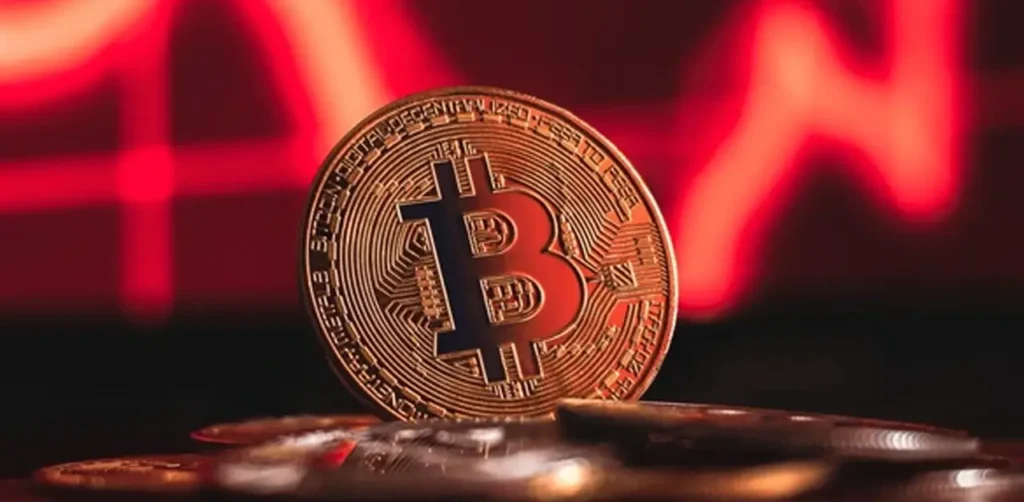
Bitcoin (BTC) climbed to a high of $94,416 early on Monday before erasing newfound gains and dropping under $90,000 support. Market movers and recent bullish developments, such as the United States (US) strategic reserve announcement, the upcoming crypto summit at the White House and BlackRock’s announcement regarding portfolio allocations, failed to catalyze a sustainable rally in Bitcoin. Why Bitcoin is back under $90,000 Crypto traders observed heightened volatility in the Bitcoin price on Monday as market participants digested the news of Trump’s US crypto strategic reserve announcement and anticipated positive developments at the upcoming crypto summit on Friday. The Bitbo Bitcoin volatility index tracks the volatility of the BTC price in US Dollars. The index shows a spike in volatility between February 23 and March 2. Volatility has climbed from 1.53% to 2.06%. Typically, positive developments in the market tend to push Bitcoin prices higher.However, during periods of heightened volatility, BTC could swing either way. Therefore, BTC is likely to correct once the “hype” or “speculation” narrative fades, among other market movers. Close to the $90,000 support, specifically between the $88,118 and $92,035 levels, traders hold over $34.83 billion worth of Bitcoin. If the price drops unexpectedly, these wallet addresses are likely to be pushed underwater, meaning they could face unrealized losses on their BTC holdings, according to IntoTheBlock data. The $90,000 level is, therefore, a key support for Bitcoin as the crypto attempts to recover and rally towards the $100,000 milestone.

The Japanese Yen (JPY) surrenders a major part of intraday gains against its American counterpart, pushing the USD/JPY pair back closer to mid-149.00s heading into the European session on Tuesday. Data released from Japan earlier today showed an unexpected uptick in the Unemployment Rate and a fall in corporate capital expenditure for the first time in three years, which, in turn, prompts some selling around the JPY.

Any meaningful JPY depreciation, however, still seems elusive in the wake of the hawkish sentiment surrounding the Bank of Japan’s (BoJ) policy outlook. Apart from this, the risk-off mood and US President Donald Trump’s threat to Japan over currency devaluation should act as a tailwind for JPY. This makes it prudent to wait for some follow-through buying before confirming that the USD/JPY pair has formed a near-term bottom.

Japanese Yen bulls turn cautious amid a modest USD uptick; downside seems cushioned
Growing speculation that the Bank of Japan will hike interest rates sooner rather than later keeps the yield on the benchmark 10-year Japanese government bond close to its highest level since 2009 and continues to underpin the Japanese Yen.

Ukrainian President Volodymyr Zelenskiy’s meeting with US President Donald Trump ended in disaster on Friday. A White House official confirmed that the US has paused military aid to Ukraine, which adds to the uncertainty in markets.

Trump’s tariffs on Mexican and Canadian goods will take effect this Tuesday, along with a new 10% levy on Chinese goods. China’s Commerce Ministry vowed to take necessary countermeasures to safeguard legitimate rights and interests.

Trump said on Monday that he has warned the leaders of China and Japan against devaluing their currencies against the US Dollar, arguing that such actions put American industries at a disadvantage.
Japan’s Finance Minister, Katsunobu Kato, said on Tuesday that the country is not pursuing a policy of devaluing the domestic currency and Japan has confirmed its “basic stance on currency policy” with US Treasury Secretary Scott Bessent.

Speaking at a separate news conference, Japan’s Economy Minister Ryosei Akazawa said that the government intervenes in the currency market only when the movement is “speculative”.
Japan’s Prime Minister Shigeru Ishiba adds that the government is not pursuing so-called currency devaluation policy.

Data released earlier this Tuesday showed that the Unemployment Rate in Japan unexpectedly edged up from 2.4% to 2.5% in January and Japanese companies reduced spending on plants and equipment in October-December by 0.2%.

The Institute for Supply Management’s (ISM) Manufacturing PMI slipped to 50.3 in February from 50.9 in the previous month, while the Prices Paid Index jumped to 62.4, or nearly a three-year high amid worries about duties on imports.

Moreover, investors remain concerned that Trump’s policies would increase price pressures and slow down activity in vital industrial sectors. This might force the Federal Reserve to cut rates further and weigh on the US Dollar.

The US Dollar Index (DXY) came under renewed selling pressure, setting aside three daily advances in a row and returning to the 106.50 region amid a mixed tone in US yields. The RCM/TIPP Economic Optimism Index is due, seconded by the API’s weekly report on US crude oil inventories. In addition, the Fed’s Williams is due to speak.

EUR/USD jumped to two-day highs above the 1.0500 mark on the back of renewed optimism around a potential end of the Russia-Ukraine war. Next on tap on the euro docket will be the release of the Unemployment Rate in the region, while the final HCOB Services PMIs in Germany and the euro area, as well as Producer Prices in the whole bloc are all expected on March 5.

GBP/USD climbed to fresh 2025 peaks past the 1.2700 hurdle on the back of the intense sell-off in the Greenback. The final S&P Global Services PMI will take centre stage on March 5, seconded by speeches by the BoE’s Bailey and Pill.

Renewed downside pressure motivated USD/JPY to leave behind three consecutive days of gains despite an initial move to muti-day highs around 151.30. Japan’s Unemployment Rate will be published, followed by Capital Spending figures and the Consumer Confidence gauge.

AUD/USD set aside six consecutive daily pullbacks and regained the 0.6200 barrier and above on Monday. The publication of the RBA Minutes will be at the centre of the debate, along with Retail Sales, and quarterly Current Account results. Additionally, the RBA’s Hauser is due to speak.

WTI dropped markedly and broke below the $68.00 mark per barrel to hit new YTD lows after the OPEC+ confirmed it will proceed with supply hikes in April.

Prices of Gold charted a decent advance and revisited the vicinity of the $2,900 region per troy ounce, leaving behind two daily drops in a row. Silver prices rebounded markedly to two-day peaks around $31.70 per ounce.

EUR/USD holds onto gains near the key level of 1.0500 in Tuesday’s European session. The major currency pair remains firm as European leaders, including Ukrainian President Volodymyr Zelenskyy, agreed to structure a peace plan to end the three-year-long war in Ukraine. Europe’s readiness to stop the massacre in Ukraine has improved the Euro’s (EUR) appeal, assuming that a truce between Russia and Kyiv would restore the fractured supply chain of the Eurozone.

This week, the major trigger for the Euro is the European Central Bank’s (ECB) monetary policy decision, which is scheduled for Thursday.

According to the February 19-27 Reuters poll, the ECB will cut its Deposit Facility Rate by 25 basis points (bps) to 2.5%. This would be the fifth interest rate cut by the ECB in a row, the sixth since the central bank started its easing cycle in June 2024. Dovish votes for the ECB’s interest rate decision were prompted by fears that United States (US) President Donald Trump’s tariff agenda will damage the Eurozone economic growth.

Min Deposit: $ 0
More Than 20 Years of Excellence
Our clients’ funds are insured up to $1,000,000

Choosing the right broker is critical for every trader’s success. We offer a unique combination of time-tested technical excellence, exceptional customer support and security of investor funds.

Min Deposit: $100
Trade CFD with 0 swap fees
Trade 2500+ instruments

Admirals Group collects and processes personal data in accordance with applicable data protection laws. If you are a European Job Applicant see the privacy notice for further details.

Min Deposit: $100
Ultra-fast execution, Dedicated support
Years of growth, Millions of trades

With offices in London, Tallinn, Limassol and the rest of the world, the Tickmill Group represents an exciting opportunity to pursue your career aspirations and develop professionally in a fast-paced and challenging sector.

Min Deposit: $100
Trade global markets
Award-winning trading platform

Plus500 is a global multi-asset fintech group operating proprietary technology-based trading platforms. Plus500 offers customers a range of trading products, including Contracts for Difference (“CFDs”), share dealing, and futures trading.

Min Deposit: $200
Razor Sharp Spreads
Deep liquidity, Trusted Broker

Pepperstone was founded in 2010 in Melbourne, Australia by a team of experienced traders with a shared commitment to improve the world of online trading. Frustrated by delayed executions, expensive prices and poor customer support, we set out to provide traders around the world with superior technology, low-cost spreads and a genuine commitment to helping them master the trade.

axi logo

Axi

Min Deposit: $1
Raw spreads, high liquidity, flexible leverage
Award-winning 24/5 customer service

Founded in 2007, our brand has grown from a two-person startup to a highly respected global group of companies, valued by thousands of traders in 100+ countries.